
Jinzhou Kaimei Power Co., Ltd.
What Is a Supercapacitor?

What Is a Supercapacitor?

Mar 16 , 2023
Table of Content [Hide]

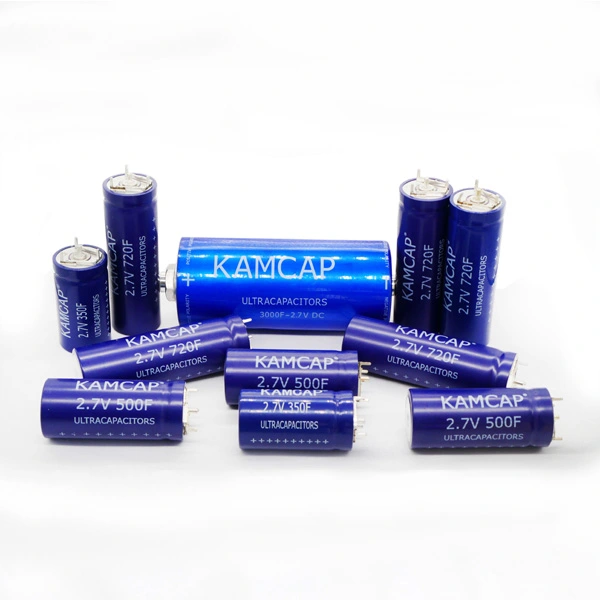
    Supercapacitor, also known as Farad Capacitor or Double-layer Capacitor, is a new type of energy storage capacitor with high energy density and fast charging and discharging capabilities, which lies between traditional capacitors and rechargeable batteries. Therefore, it has the ability to store electrical charge like a chemical battery, while still maintaining the discharge power of a traditional capacitor. However, the discharge power of supercapacitor is much higher than that of traditional capacitors.


    Reason for the name of supercapacitor

    The reason why it is called a supercapacitor is because it is a container for storing electrical charges with a large capacitance and fast charging speed. Compared with ordinary capacitors, the capacitance of supercapacitors for sale is very large, reaching the level of Farad, while the capacitance of ordinary capacitors is only in the micro-Farad range.


    Materials used in supercapacitor

    The porous carbon material used in the super supercapacitor increases the specific surface area of the structure, enabling it to absorb more charges on the surface and expand its energy storage capacity. This is why supercapacitor has a larger capacitance.


    The porous carbon material used in supercapacitor has excellent conductivity, which allows for the smooth transfer of electrical charges. During the energy storage process, no chemical reactions occur, making the charging speed of supercapacitor fast.


    Kamcap supercapacitor is suitable for fast charging electronic products and can be used as a backup power source for various large electronic devices. If you need a capacitor with high power, large capacitance, and fast discharge speed, supercapacitor is a good choice.


    How Does a Super Capacitor Work?

    When a voltage is applied to a supercapacitor, ions in the electrolyte move toward oppositely charged electrode surfaces. Because the electrodes have a highly porous structure, they provide a very large effective surface area on which electrical charge can accumulate.

    In an electric double-layer capacitor, positive and negative charges are separated across an extremely small distance at the electrode-electrolyte interface. The combination of a large surface area and very small charge-separation distance produces high capacitance.

    When the supercapacitor is connected to a load, the stored charge is released through the external circuit. Because this process can occur rapidly, supercapacitors are particularly suitable for applications requiring fast charging, high instantaneous power, short-term backup energy, or frequent cycling.

    For a more detailed explanation of ion movement, charging, discharging, and electric double-layer formation, KAMCAP's supercapacitor working principle guide provides additional technical information.


    What Are the Main Types of Supercapacitors?

    Supercapacitors can generally be classified into three groups according to their materials and energy-storage mechanisms.

    Electric Double-Layer Capacitors

    Electric double-layer capacitors, or EDLCs, commonly use high-surface-area carbon electrodes. Energy is stored primarily through electrostatic charge separation. EDLCs are widely used where rapid charging, high power, and long cycle capability are important.

    Pseudocapacitors

    Pseudocapacitors use fast and reversible Faradaic processes associated with suitable electrode materials. Their electrical behavior and performance depend strongly on the electrode and electrolyte system.

    Hybrid Supercapacitors

    Hybrid supercapacitors combine different energy-storage mechanisms to achieve a balance between energy, power, voltage, and cycle performance.

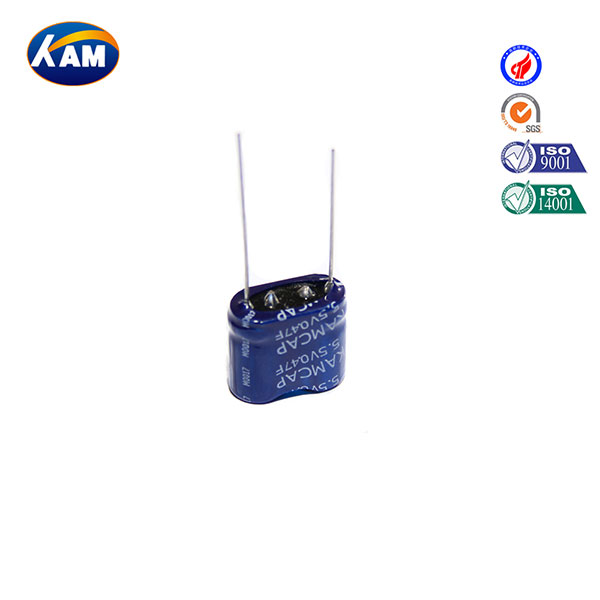
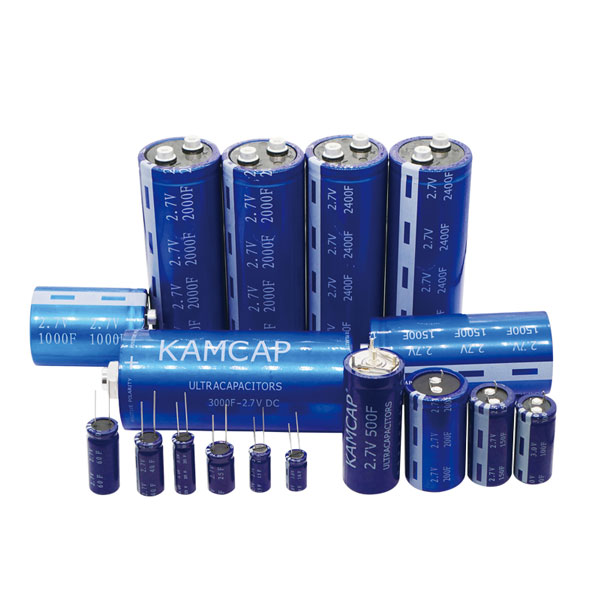
    From a product-design perspective, supercapacitors are also available in different physical constructions. KAMCAP provides coin-type, winding-type, full-welding, combined-type, module, high-temperature, and hybrid capacitor series for different voltage, capacitance, current, temperature, and installation requirements.


    Supercapacitor vs Capacitor vs Battery

    A supercapacitor occupies a useful position between a conventional capacitor and a rechargeable battery. Conventional capacitors can charge and discharge extremely quickly but normally store relatively little energy. Batteries generally store more energy for longer operating periods, while supercapacitors are particularly suitable for rapid charging, high-power output, and repeated cycling.

    FeatureConventional CapacitorSupercapacitorRechargeable Battery
    Charge/discharge speedVery fastFastGenerally slower
    Energy storageLowHigher than conventional capacitorsGenerally higher
    Power capabilityVery highHighGenerally lower
    Cycle capabilityVery highVery highMore limited
    Typical roleFiltering and short pulsesBackup, pulse power, energy recoveryLonger-term energy supply

    Therefore, none of these technologies is automatically better in every application. The correct choice depends on energy demand, power demand, backup duration, charging time, temperature, size, and expected service life.


    Key Specifications for Selecting a Super Capacitor

    Choosing a supercapacitor only by capacitance is a common mistake. Engineers should normally consider rated voltage, capacitance, ESR, leakage current, discharge current, operating temperature, cycle life, available space, and required backup time together.

    Rated voltage determines the recommended operating voltage of an individual cell. When the system voltage is higher than the voltage rating of one cell, several cells may need to be connected in series or integrated into a supercapacitor module. Voltage balancing should also be considered in series-connected systems.

    Capacitance indicates how much charge can be stored for a given voltage change. However, two devices with the same capacitance rating may perform very differently if their ESR, leakage current, voltage rating, or temperature characteristics are different.

    ESR, or equivalent series resistance, is especially important when a large current must be delivered quickly. Current passing through internal resistance creates an immediate voltage drop and generates heat. For pulse-power, motor-support, starting, and other high-current applications, a low ESR supercapacitor can therefore be an important selection factor.

    Operating temperature should also be considered during initial selection rather than after the product has been chosen. Outdoor electronics, automotive systems, smart-grid devices, and industrial equipment may operate far above or below room temperature. Product performance and lifetime should therefore be evaluated under conditions that reflect the real application environment.


    Common Supercapacitor Selection Mistakes

    One of the most common selection mistakes is focusing only on the farad value. For example, two 100 F supercapacitors do not necessarily provide the same high-current performance, voltage drop, leakage characteristics, temperature capability, or expected lifetime.

    Another mistake is ignoring ESR. Even when the available capacitance appears sufficient, excessive internal resistance can cause the voltage to drop below the minimum operating voltage of the equipment as soon as a large current is drawn.

    Series connection also requires more consideration than simply adding individual cell voltages. Differences in capacitance and leakage current can lead to unequal voltage distribution between cells, so balancing and over-voltage protection may be required.

    Temperature is another factor that is often underestimated. A product selected according to room-temperature performance may behave differently when continuously exposed to high or low temperatures. ESR, leakage current, available capacitance, and lifetime can all be affected.

    For a KAMCAP product selection inquiry, it is therefore useful to provide the required operating voltage, capacitance, peak or continuous discharge current, allowable voltage drop, backup time, ESR requirement, operating temperature, dimensions, and expected application. These parameters provide a much better basis for selecting a suitable product than capacitance alone.


    When Is a Supercapacitor Not the Best Choice?

    Although supercapacitors provide important advantages, they are not the best energy-storage solution for every project.

    If a system needs to supply relatively low power continuously for many hours, a battery will usually provide greater energy storage in a smaller package. Similarly, applications that need to retain stored energy for very long periods with minimal self-discharge may not be ideal for a supercapacitor alone.

    A designer should also avoid assuming that a higher capacitance automatically means a better solution. Oversizing a supercapacitor can increase cost, size, and charging requirements without providing a meaningful improvement to the application.

    This is why the selection process should start with the actual load profile and operating environment rather than simply choosing the largest available capacitance.


    Where Are Supercapacitors Used?

    KAMCAP supercapacitors can be used in applications requiring fast charging, high power, rapid discharge, or short-term backup power. Typical applications include smart meters, backup power supplies, UPS systems, telecommunications equipment, power-grid terminals, consumer electronics, industrial equipment, automotive electronics, renewable-energy systems, and IoT devices.

    Compact electronics and short backup functions may use coin-type or compact winding products. Applications with large pulse currents may benefit from low ESR winding supercapacitors, while higher-voltage systems can use combined capacitors or supercapacitor modules. Equipment operating in demanding thermal environments should use a product designed for the required temperature range.

    More industry-specific examples are available in KAMCAP's guide to applications of supercapacitors.


    KAMCAP Supercapacitor Solutions

    JINZHOU KAIMEI POWER CO.,LTD is a high-tech enterprise mainly engaged in the research, development, production and sales of supercapacitors. Kamcap has more than 800 employees and a factory area of 19,200 square meters. Welcome to consult, you can send a email to info@kamcap.com or dial at +86-18640666860 if interested.
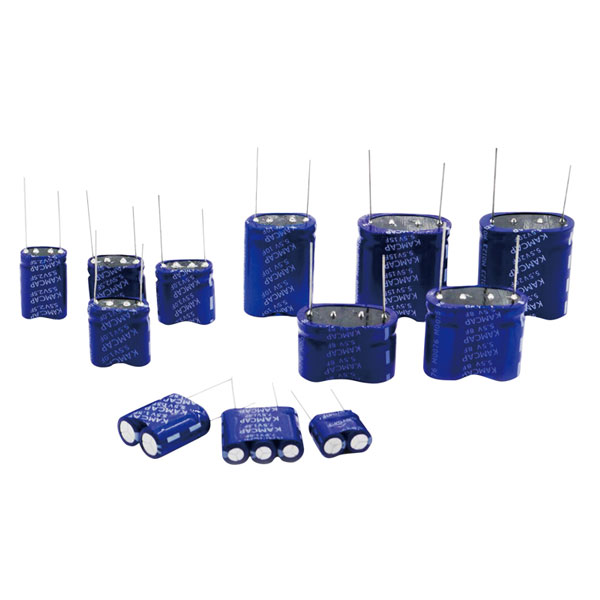
    Different applications require different combinations of voltage, capacitance, ESR, current capability, temperature performance, dimensions, and service life. KAMCAP provides coin-type, winding-type, full-welding, combined-type, module, high-temperature, and hybrid capacitor solutions for different application requirements.

    Customers who need help selecting a supercapacitor can provide the operating voltage, required capacitance, discharge current, backup time, ESR requirement, operating temperature, available dimensions, and intended application so that a more suitable product type can be evaluated.


    Frequently Asked Questions About Supercapacitors

    Is a supercapacitor the same as an ultracapacitor?

    In most commercial and engineering contexts, supercapacitor, super capacitor, and ultracapacitor refer to the same broad class of high-capacitance energy-storage devices.


    Can a supercapacitor replace a battery?

    Not in every application. Batteries are generally better suited to longer-duration energy storage, while supercapacitors are particularly useful for rapid charging, high-power output, short-term backup, and frequent cycling. Some systems use both technologies together.


    Why is ESR important in a supercapacitor?

    ESR represents internal resistance. During high-current discharge, it contributes to immediate voltage drop and heat generation. Lower ESR is therefore particularly important in applications requiring high instantaneous power.


    Can supercapacitors be connected in series?

    Yes. Connecting cells in series can increase the usable system voltage, but designers should also consider cell-to-cell variation, voltage balancing, and over-voltage protection.


    When should a battery be considered instead of a supercapacitor?

    A battery may be more suitable when an application needs many hours of continuous energy delivery or very low self-discharge during long storage periods. The final decision should be based on the actual load profile and operating requirements.


    References