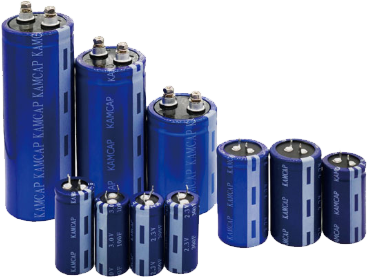




In an era demanding rapid energy storage and release, supercapacitors (or ultracapacitors) have emerged as a critical component bridging the gap between traditional capacitors and batteries. But how exactly do they achieve their high power density and incredibly fast charge-discharge cycles? The answer lies in a fundamental and efficient physical process. This article delves into the supercapacitor working principle, explaining the science that powers Kamcap's diverse range of high-performance ultracapacitors.
Readers who need a basic definition before examining the working principle can first review how we define supercapacitor technology, including its energy-storage method and key differences from batteries and conventional capacitors.
At the heart of every supercapacitor is a simple yet powerful mechanism called the Electric Double-Layer (EDL) effect. Unlike batteries, which rely on slow electrochemical reactions, supercapacitors store energy electrostatically.
The energy storage principle of a supercapacitor (electric double-layer capacitor) refers to the adsorption of positive and negative ions on the surface between the solid electrode and the electrolyte. This creates a potential difference between the two solid electrodes, thereby enabling energy storage.
Here's a step-by-step breakdown of the process:
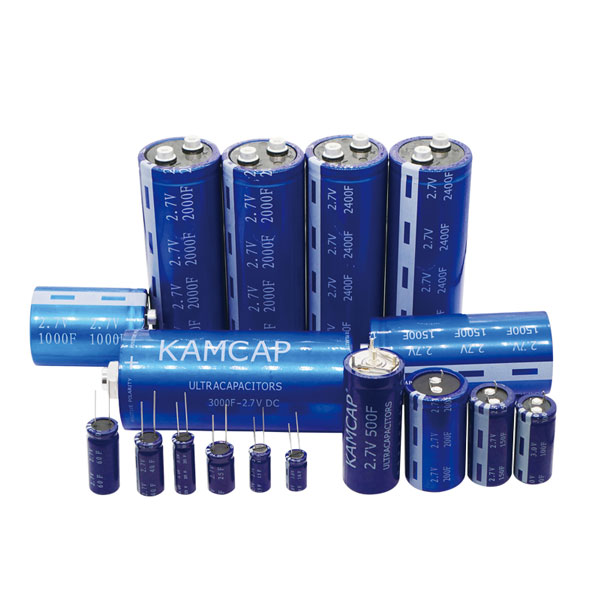
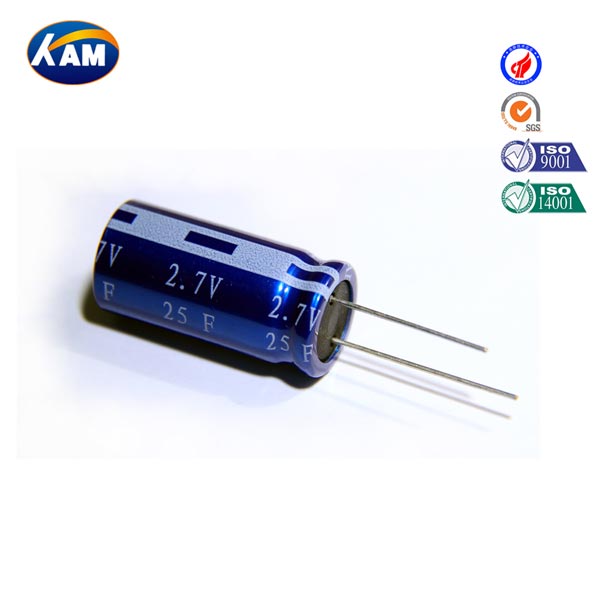
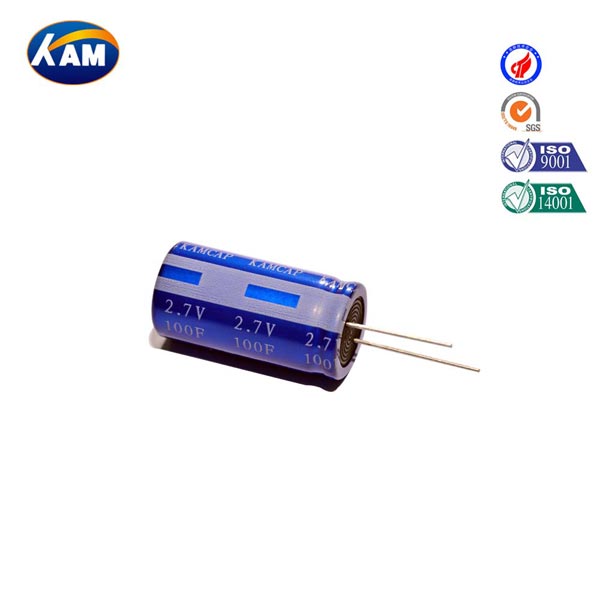
Structure: As seen in the common cylindrical design, a supercapacitor internally consists of two porous electrodes soaked in an electrolyte, separated by a membrane (diaphragm). This structure, often wound, maximizes the surface area.
Technical Insight: "This product uses a cylindrical capacitor shape. The inside is a winding structure, the positive and negative electrode sheets are separated by a diaphragm, and are immersed in electrolyte components."
Charging: When a voltage is applied, an electric field is created. Under the influence of this field, the electrolyte's ions move rapidly: positive ions (cations) are attracted to and gather at the surface of the negative electrode, while negative ions (anions) gather at the surface of the positive electrode.
Forming the "Double Layer": At each electrode-electrolyte interface, a nanometer-scale layer of these oppositely charged ions forms. This is the "electric double layer." It acts like two incredibly thin, high-surface-area capacitors connected in series.
Energy Storage: Energy is stored physically in this double layer. There are no chemical reactions involved, which is the key to the supercapacitor's long lifecycle and rapid charging.
Discharging: When the circuit is closed, the ions quickly detach from the electrode surfaces and return to the electrolyte, releasing the stored energy almost instantaneously.
This principle allows for large current rapid charging and discharging. The capacitance is directly proportional to the effective specific surface area of the electrode material used.
The EDL principle gives supercapacitors unique advantages:
Extremely Fast Charge/Discharge: With no slow chemical reactions, energy can be absorbed and delivered in seconds.
High Power Density: They can deliver powerful bursts of energy, perfect for applications requiring a quick power boost.
Exceptional Longevity: Capable of enduring millions of charge-discharge cycles with minimal degradation because the process is physical, not chemical.
High Reliability: Stable performance across a wide temperature range.
Understanding the supercapacitor working principle is one thing; manufacturing reliable components that consistently perform to this standard is another. Kamcap, as one of the professional supercapacitor manufacturers in China, is devoted to the research, development, and strict quality control of ultracapacitors.
We expertly apply the EDL principle across our comprehensive product portfolio, ensuring each product meets the highest standards:
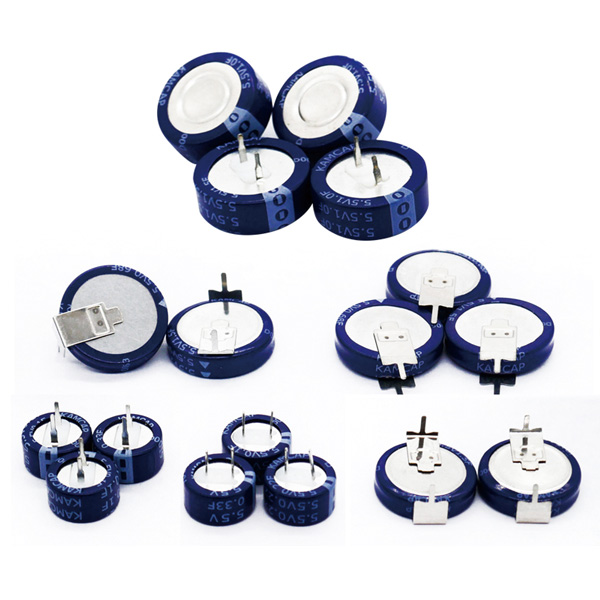
Coin Type Supercapacitor: Ideal for compact consumer electronics where space is limited.
Winding Type Supercapacitor: Optimized for RAM backup, smart utility grids, and car dashcams. For automotive applications requiring immediate high-current starting power, you can read our deep-dive guide on Supercapacitor Vehicle Starters to see how winding cells provide instant engine ignition.
Combined & Module Supercapacitor: By connecting individual premium Supercapacitor Cells in series or parallel, we build high-voltage, heavy-duty modules optimized for backup power grids and wind turbine pitch control.
High Temperature Supercapacitor: Engineered to operate reliably in harsh environments up to 85°C.
Hybrid Capacitor: Combines EDL and battery-like technologies for a balance of high energy and power density.
The physical nature of the mechanism of supercapacitor energy storage grants it unique operational specifications that distinguish it from other active components:
| Technical Parameters | EDL Supercapacitor (EDLC) | Hybrid Supercapacitor | Standard Capacitor |
| Energy Storage Mechanism | Purely Physical (Electrostatic) | Combined (Physical + Chemical) | Purely Physical (Dielectric) |
| Energy Density | Medium (1to 10 Wh/kg) | High (10 to 30 Wh/kg) | Extremely Low (< 0.1Wh/kg) |
| Power Density | Extremely High (Up to 10,000 W/kg) | Medium-High | Maximum |
| Charge/Discharge Time | 1 to 10 seconds | Minutes | Microseconds |
| Cycle Life Performance | Over 500,000 to 1,000,000 cycles | Approx. 20,000 to 50,000 cycles | Infinite |
Our commitment to quality, rooted in a deep understanding of the supercapacitor working principle, has made us a trusted partner for global industry leaders like TTI, Samsung, and ALSTOM. As a main drafting unit of China's national technical standards for supercapacitors, we are not just manufacturers; we are innovators and industry pioneers.
The supercapacitor working principle, based on the physical separation of charge in the electric double layer, is the cornerstone of a transformative energy storage technology. It enables the high power, speed, and durability that modern applications require.
For engineers and designers seeking reliable supercapacitor solutions, partnering with an expert manufacturer is crucial. Kamcap's extensive experience and diverse product range make us the ideal choice to power your next innovation, from smart grids and consumer electronics to automotive and industrial applications.
Ready to leverage the power of supercapacitors in your design? Explore Kamcap's high-quality ultracapacitor products and find your perfect energy storage solution today.
Answer: The total capacitance is directly proportional to the effective specific surface area of the porous electrode material (such as activated carbon) and inversely proportional to the thickness of the electric double layer (the distance between the electrode surface and the aligned ions).
Answer: A standard capacitor uses a solid dielectric insulation material between two metallic plates to store charge. A supercapacitor has no solid dielectric; instead, it utilizes a liquid electrolyte solution and a porous physical separator, creating an electric double layer that provides thousands of times more surface area for charge accumulation.
Answer: A standard EDLC stores energy purely via electrostatic double-layer adsorption (physical). A hybrid supercapacitor utilizes one EDLC-style electrostatic electrode and one battery-style chemical electrode. This unique hybrid structure offers the fast charging benefits of a supercap alongside the higher energy storage capacity of a traditional battery.


 English