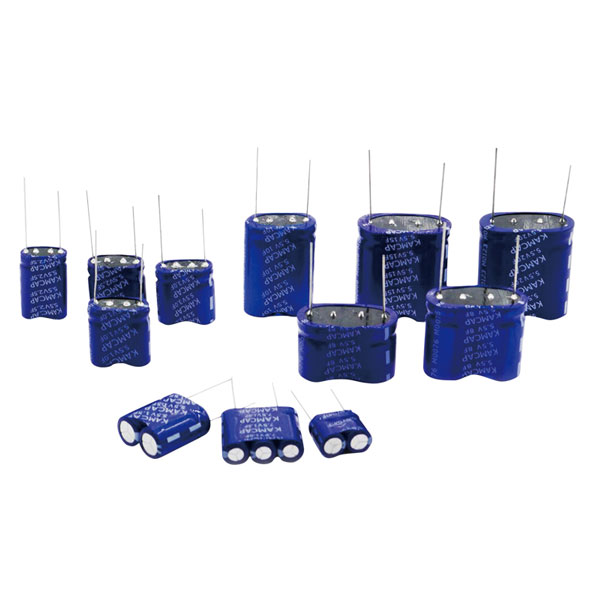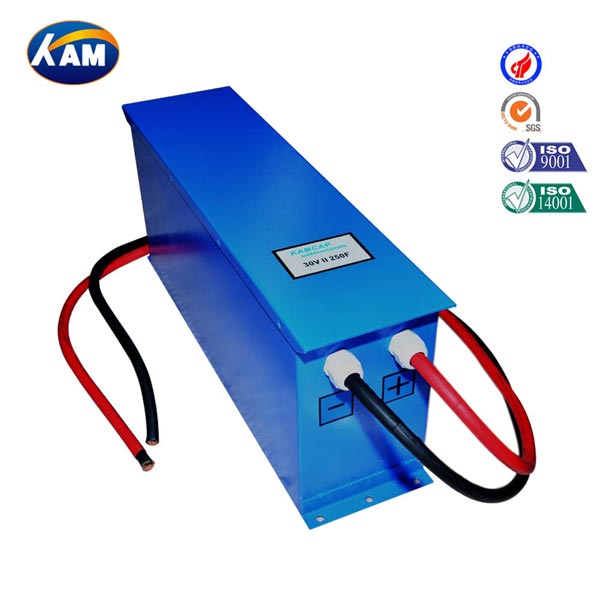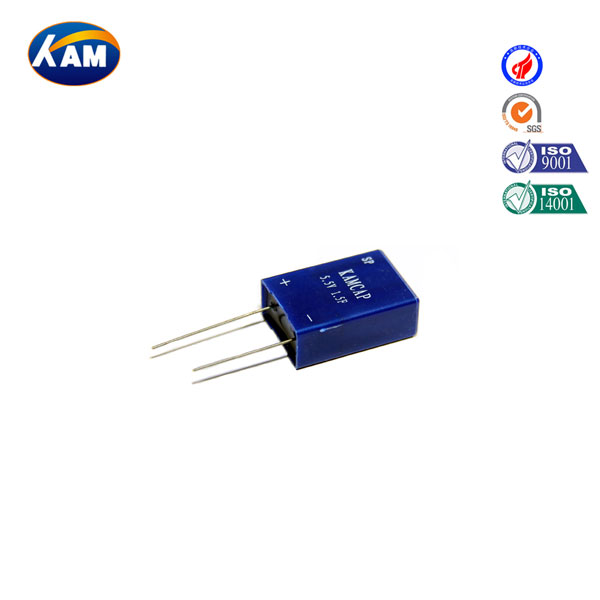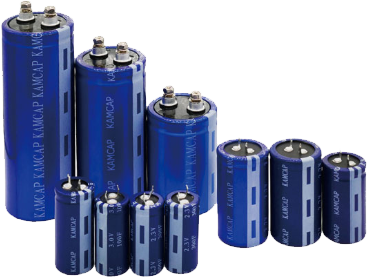




Supercapacitor modules provide an integrated energy-storage solution for systems requiring high power, rapid charging, frequent cycling, or short-duration backup. Compared with building a complete bank from individual cells, a module can simplify electrical configuration, mechanical integration, balancing, protection, and installation.
However, selecting the right module involves more than comparing voltage and capacitance. Engineers should consider series-parallel architecture, ESR, peak current, usable energy, charging conditions, temperature, and mechanical constraints. Whether ultracapacitor modules are intended for automotive electronics, UPS systems, distribution automation, or medical equipment, the configuration should match the actual load profile and operating environment.
KAMCAP provides supercapacitor cells and customized module solutions for industrial energy-storage and backup-power applications.
Individual cells offer maximum configuration flexibility, while a pre-built module can reduce the engineering work required to create a complete energy-storage assembly. The appropriate approach depends on system voltage, required capacitance, current demand, available installation space, environmental conditions, and the customer's system-integration capabilities.
A pre-built module is often worth considering when a project requires:
Higher operating voltage than a single supercapacitor cell can provide
Integrated balancing, monitoring, or protection functions
Simplified mechanical installation and electrical connections
Consistent assembly for production-level applications
Customized terminals, enclosures, or mounting structures
Reduced internal engineering and validation work
Discrete cells may be more appropriate when engineers require complete control over the series-parallel configuration and already have their own balancing, protection, monitoring, and mechanical systems.
For commercial projects, the comparison should therefore consider total engineering effort and system integration rather than individual component cost alone.
Series and parallel connections change the electrical behavior of a supercapacitor module in different ways. When identical cells are connected in series, their voltage capability increases while equivalent capacitance decreases. For N identical cells, the simplified equivalent capacitance is Ctotal = Ccell / N.
Parallel connection maintains the same operating voltage but increases total capacitance because the capacitances of the parallel branches are added together. A series-parallel architecture can therefore be designed when the application requires both a higher operating voltage and greater energy storage.
| Configuration | Voltage Capability | Equivalent Capacitance | Typical Design Purpose |
| Series | Increases | Decreases | Higher system voltage |
| Parallel | Unchanged | Increases | Greater capacitance |
| Series-parallel | Increases | Configurable | Higher voltage and energy |
These basic relationships are only the starting point. Real module performance also depends on ESR, cell tolerances, interconnection resistance, current demand, thermal conditions, and the usable voltage range. Engineers should evaluate the complete discharge profile rather than choosing a module only from its nominal voltage and capacitance.
Cells connected in series may not divide the total module voltage equally. Variations in capacitance, leakage current, temperature, ESR, and aging can cause individual cell voltages to differ. If one cell is driven beyond its intended operating voltage, module reliability can be affected.
Analog Devices provides a detailed explanation of voltage balancing techniques for series-connected supercapacitors, including passive and active approaches for controlling voltage differences within a series stack.
Balancing should therefore be considered together with charging and protection rather than treated as an isolated feature. Depending on the module and application, designers may need cell-voltage monitoring, overvoltage protection, temperature monitoring, current protection, or active balancing circuitry.
For additional system-level reference, Texas Instruments' supercapacitor manager reference design demonstrates a design incorporating charging, monitoring, protection, and active balancing for series-connected supercapacitors. These functions are particularly relevant when a module contains multiple cells and operates at a substantially higher voltage than a single cell.
Different applications impose different requirements on supercapacitor modules, so a single configuration cannot be assumed to fit every project. Automotive applications may prioritize pulse-current capability, compact packaging, rapid charge acceptance, and operation across a wide temperature range. The module must be evaluated according to the electrical architecture and environmental requirements of the particular vehicle system.
UPS applications are typically driven by backup duration, load current, allowable voltage drop, recharge time, and the minimum voltage required by downstream electronics. For DTU, FTU, and TTU distribution-automation equipment, a module may provide temporary energy for communication, monitoring, switching, or controlled operation when the normal power supply is unavailable.
Medical equipment presents different design considerations. Backup behavior, charging control, physical dimensions, electrical protection, and the standards applicable to the specific device should all be evaluated during system development.
The U.S. Department of Energy-supported Grid Energy Storage Technology Cost and Performance Assessment provides technical and economic assessment resources covering multiple energy-storage technologies, including electrochemical capacitors. Such independent references can help engineers understand where high-power storage technologies fit within broader energy-storage requirements.
The application should ultimately define the module—not the other way around.

When requesting customized ultracapacitor modules, complete project information allows the supplier to evaluate cell selection, series-parallel architecture, mechanical design, and supporting electronics more accurately.
Useful information to provide includes:
Nominal, maximum, and minimum operating voltage
Required capacitance or usable energy
Continuous current and transient peak current
Backup time or pulse duration
Charging voltage, charging current, and recharge target
Operating temperature and environmental conditions
Maximum dimensions and installation method
Balancing, protection, monitoring, or communication requirements
The application and operating sequence should also be described. A module designed to supply several seconds of UPS ride-through can require a different configuration from a module intended for repeated high-current automotive pulses.
KAMCAP can use these electrical, mechanical, and environmental parameters to evaluate a suitable customized module solution instead of selecting components based on capacitance alone.
Selecting supercapacitor modules requires coordinated evaluation of voltage, capacitance, ESR, peak current, usable energy, balancing, protection, temperature, charging strategy, and mechanical integration. Pre-built or customized modules can reduce system-level integration work, while discrete cells provide greater freedom for specialized designs. Engineers should define the real load profile and operating environment before choosing an architecture, then verify both energy storage and power-delivery requirements. For KAMCAP supercapacitor module selection, customization, or technical support, contact +86-18640666860 or info@kamcap.com.
Module voltage primarily depends on the number of cells connected in series and the permitted operating voltage of each cell.
No. For identical cells, series connection increases voltage capability while reducing equivalent capacitance.
Yes. Parallel connection increases total capacitance while maintaining the same nominal voltage.
Yes. Voltage, capacitance, current capability, dimensions, terminals, balancing, protection, and other features can be configured for specific projects.
Requirements depend on module design and operating conditions. Electrical connections, temperature conditions, and system performance should be considered within the equipment's maintenance plan.
Usable energy depends on capacitance and the permitted voltage range, while ESR, conversion efficiency, current demand, and operating conditions influence the energy that can practically be delivered.


 English